
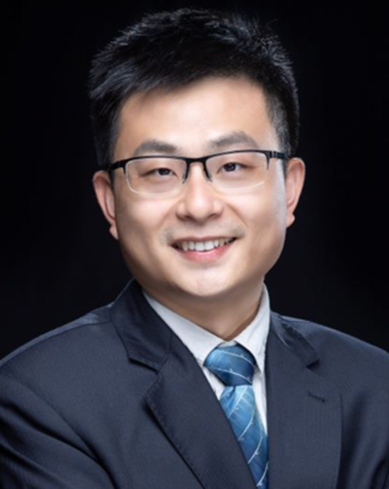
Prof. Feng Yin
In this talk, automated kernel design for Bayesian learning and optimization will be introduced, addressing several important limitations including manual kernel dictionary dependence, fixed-form hyperparameter fitting, expensive grammar-based kernel searches, and isolated kernel optimization.
Two novel approaches will be highlighted: Grid Spectral Mixture Product (GSMP) and Context-Aware Kernel Evolution (CAKE).
GSMP factorizes spectral mixtures across dimensions, reducing hyperparameter growth from exponential to linear complexity while preserving universal approximation capability and promoting frequency sparsity.
Meanwhile, CAKE leverages Large Language Models (LLMs) to invent kernel structures using crossover and mutation strategies, consistently outperforming conventional baselines in Bayesian optimization tasks.
Biography
Feng Yin received his B.Sc. degree from Shanghai Jiao Tong University, China, and his M.Sc. and Ph.D. degrees from Technische Universitaet Darmstadt, Germany. He received the EU Marie-Curie Young Fellowship and worked at Ericsson Research, Linkoping, Sweden.
He is currently a tenured Associate Professor with the School of Artificial Intelligence (SAI) at The Chinese University of Hong Kong, Shenzhen. His research interests include statistical signal processing, Bayesian learning and optimization, and applications to spatial intelligence and artificial intelligence of things.
He has published more than 130 top-tier journal and conference papers, as well as 20 patents and standards. He currently serves as Associate Editor for the IEEE Transactions on Signal Processing.
He is an IEEE Senior Member and serves on the IEEE Machine Learning and Signal Processing (MLSP) Technical Committee and the IEEE SPS Scholarship Committee.
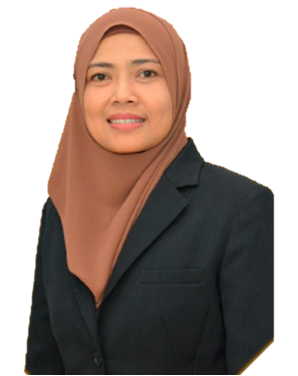
Prof. Sharifah Hafizah Syed Ariffin
The rapid expansion of Internet-of-Things (IoT) applications has introduced significant challenges in managing heterogeneous traffic within shared edge network infrastructures. Modern IoT edge environments must simultaneously support sensor telemetry, web applications, video streaming, and bulk data transfer, each with distinct Quality of Service (QoS) requirements.
Traditional static bandwidth allocation methods are often unable to adapt to dynamic traffic variations, leading to inefficient resource utilisation and potential Service Level Agreement (SLA) violations.
This keynote discusses intelligent orchestration in multi-tenant IoT edge environments through the integration of Software-Defined Networking (SDN), edge computing, and adaptive resource management techniques.
By leveraging SDN programmability and intelligent traffic control, edge networks can dynamically optimise bandwidth allocation, improve tenant isolation, and enhance QoS performance in real time.
The session also highlights emerging approaches for autonomous network optimisation and scalable multi-tenant edge architectures that support future intelligent IoT ecosystems.
Biography
Sharifah Hafizah Syed Ariffin received her B.Eng (Hons) from London in 1997, obtained her Master in Engineering in 2001 from Universiti Teknologi Malaysia, and completed her Ph.D in 2006 from Queen Mary, University of London, United Kingdom.
She is currently a Professor with the Faculty of Electrical Engineering, Universiti Teknologi Malaysia (UTM), Johor Bahru, Malaysia, and a member of the Communication Network System Research Group (CNetS).
Her research activities involve several IoT-related projects, Network Performance Evaluation, Virtual Software Defined Networking, technical trainings, and industrial consultation.
She has published several books, more than 135 scientific papers, 19 copyrights, 1 integrated circuit (IC), and 1 trademark.
She is also a registered Professional Engineer with the Board of Engineers Malaysia, Senior Member of IEEE Communication Society (SMIEEE), member of IEEE COMSoC, and Graduate Member of the Institution of Engineering Malaysia (MEIM).
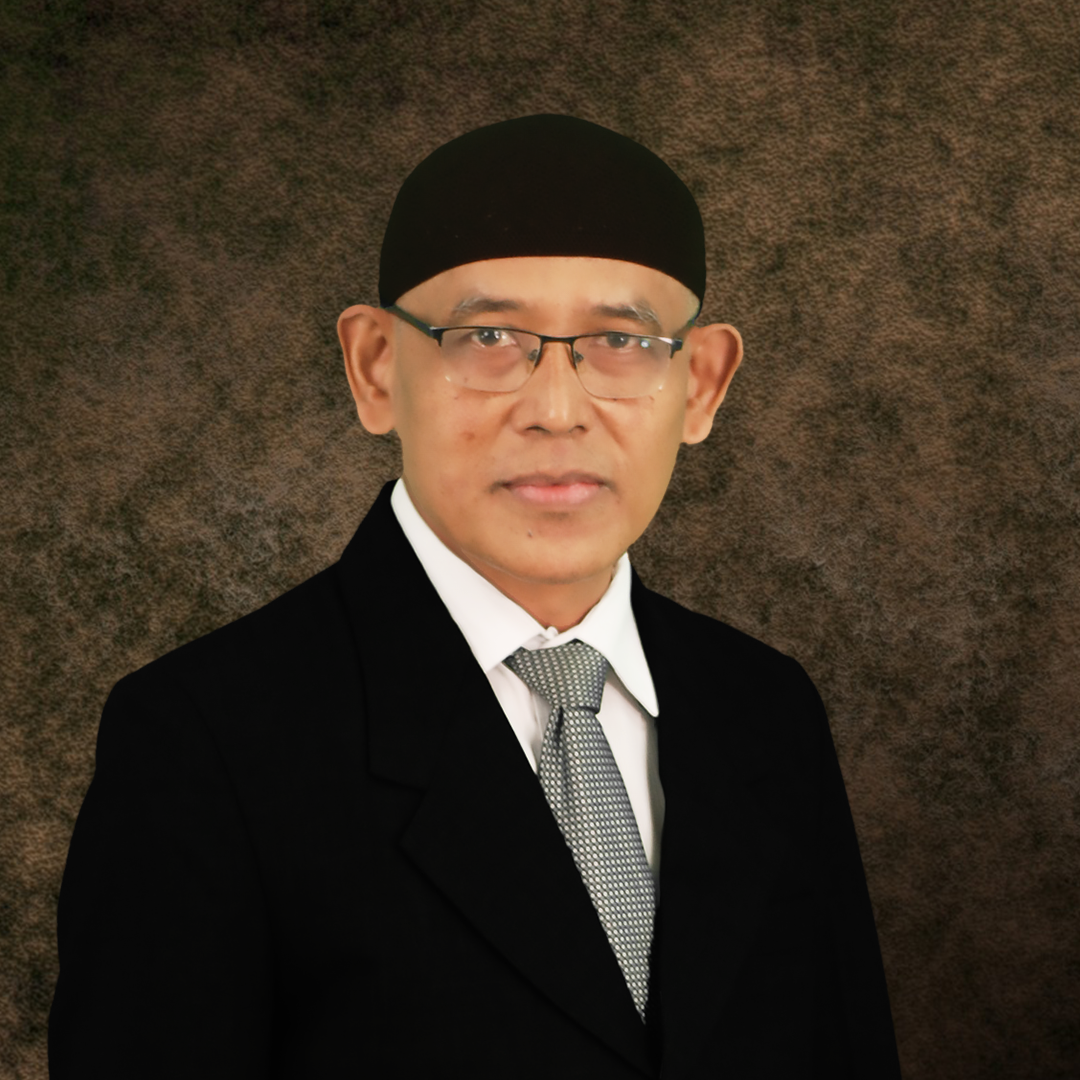
Prof. Dr. Ir. Jangkung Raharjo, M.T.
The global transition toward sustainable energy has emerged as one of the most critical challenges of the 21st century. Driven by the growing demand for affordable, reliable, and clean energy, alongside the urgent need to mitigate climate change, nations worldwide are accelerating efforts to transform their energy systems toward a more sustainable future.
However, the development of sustainable electricity systems extends far beyond technological innovation. It requires a holistic and multidisciplinary approach that integrates energy economics, environmental sustainability, regulatory and policy frameworks, infrastructure planning, and human capital development.
The success of the energy transition depends on achieving a careful balance between energy security, affordability, accessibility, social acceptance, and environmental stewardship.
This presentation explores the complex challenges and emerging opportunities associated with sustainable energy development in the context of global climate action and the Sustainable Development Goals (SDGs).
Particular attention is given to renewable energy deployment, techno-economic considerations, environmental impacts, policy and regulatory support, and strategies for ensuring long-term sustainability and resilience.
Furthermore, the discussion highlights the importance of collaboration among academia, industry, government, and society in shaping the future energy landscape. By fostering innovation, strengthening policy frameworks, and developing a highly skilled workforce, sustainable energy systems can become a key enabler of economic growth, environmental protection, and climate resilience for future generations.
Biography
Jangkung Raharjo earned his Bachelor's degree in Engineering and Master's degree in Electrical Engineering from the former Institut Teknologi Telkom and obtained his Doctoral degree in Electrical Engineering from Institut Teknologi Sepuluh Nopember.
Since 1991, he has served as a faculty member in the Faculty of Electrical Engineering at Telkom University.
He currently holds the position of Full Professor at Telkom University, with research interests focusing on power systems and sustainable energy.
At present, he serves as the Head of the Center of Excellence for Sustainable Energy and Climate Change at Telkom University, leading various initiatives related to energy transition, climate resilience, and sustainable development.
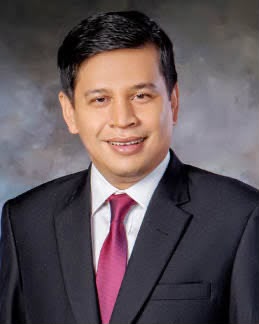
Prof. Ir. Selo, S.T., M.T., M.Sc, Ph.D., IPU, ASEAN Eng.